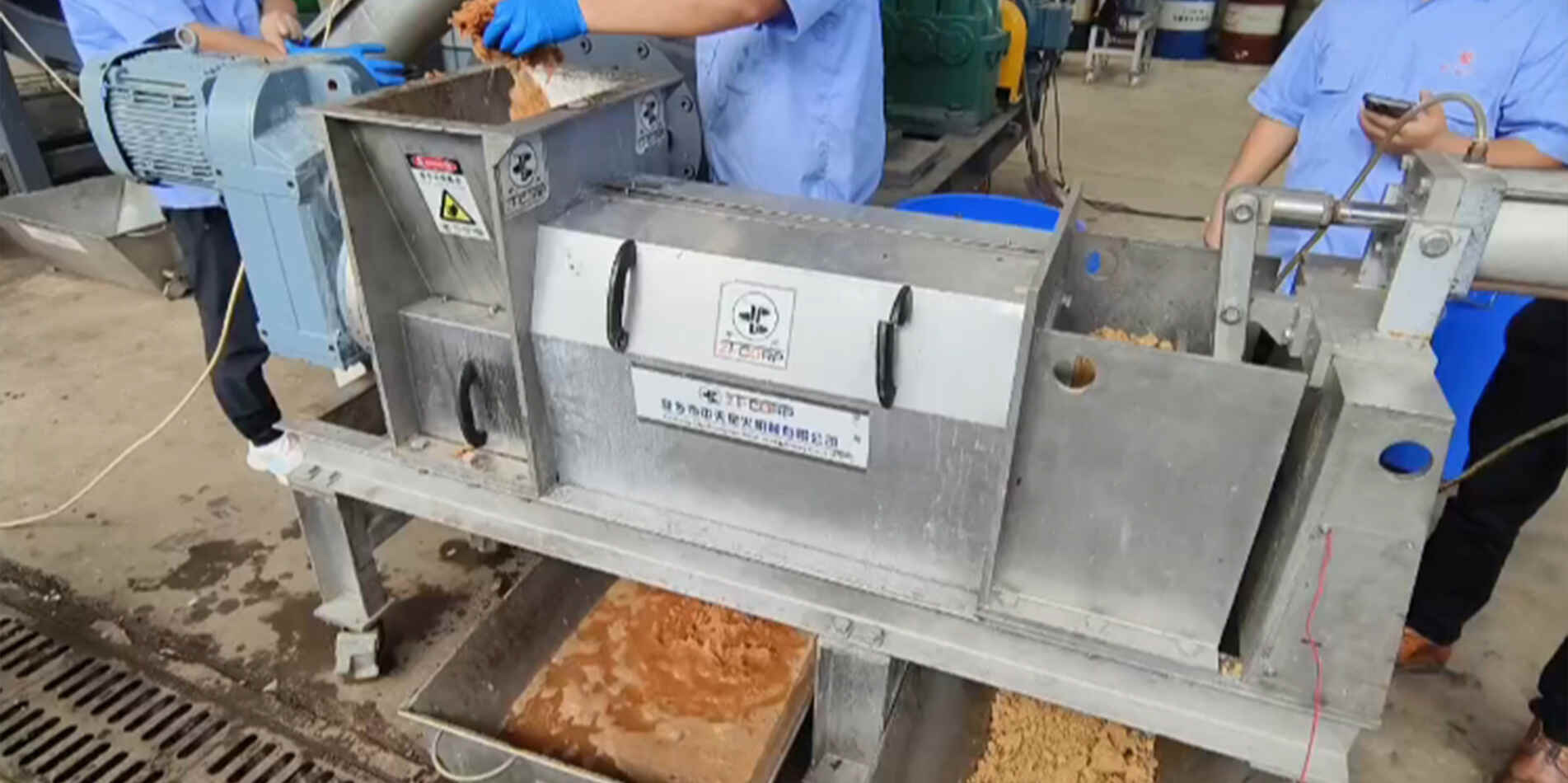
As a highly efficient solid-liquid separation device, the screw press dewatering machine is widely used for dewatering fibrous materials due to its unique physical extrusion technology. Zhongtian Xinghuo Machinery’s editor will provide a detailed analysis of its technical advantages from two aspects: working principle and core features.
The screw press dewatering machine is designed based on the principle of superimposed compression. It mainly relies on the cooperation of the feed box, screw, screen, and tail cone to achieve the purpose of juicing and dewatering. The material to be processed is evenly conveyed to the feed inlet of the dewatering machine by a pump or screw. After being squeezed by the screw blades and filtered by the screen, water or juice flows through the screen to the water collection tray at the bottom of the machine and is then collected and transported away through pipelines. The residue after juicing and dewatering is conveyed to a designated location by a conveyor belt.
No flocculants or desiccants are needed throughout the process. Solid-liquid separation is completed by mechanical force, eliminating chemical residues. It is especially suitable for clean dehydration needs in food processing (such as vegetable and fruit residues and soybean meal) and environmental protection (such as sludge and biomass waste).
Variable Frequency Drive Technology: Motor power can automatically adjust according to the load, saving more than 40% of electricity compared to traditional equipment.
Zero Thermal Energy Consumption: Compared to thermal drying processes, no steam or fuel is required, directly reducing carbon emissions.
Closed-Loop Water Circulation: The extruded liquid can be treated and reused, reducing water waste.
For fibrous materials (such as wood pulp and straw), the moisture content can be reduced from over 80% to 45%-50% while maintaining the integrity of the fiber structure, which is beneficial for subsequent pulping, fuel molding, or organic fertilizer production. Experimental data shows that the calorific value of bagasse increases by 30% after treatment, significantly improving its resource utilization value.
Upgraded Materials: The spiral blades and screen are made of high-chromium alloy steel or tungsten carbide coating, which is corrosion-resistant, wear-resistant, and has a service life of 5-8 years.
Modular Design: Wear-prone parts (such as screens) can be quickly replaced, reducing downtime for maintenance by 70%.
By adjusting the screen aperture, screw speed, and pressure, it can flexibly process materials with different characteristics, including highly viscous kitchen waste, tough medicinal herb residue, and fine fiber pulp.
Currently, the screw press dewatering machine has been successfully applied in papermaking, fruit and vegetable juicing, biopharmaceuticals, pharmaceuticals, and food processing. In the future, we will continue to integrate IoT technology to achieve real-time moisture content monitoring and intelligent pressure feedback, further promoting its development towards intelligence and green technology.
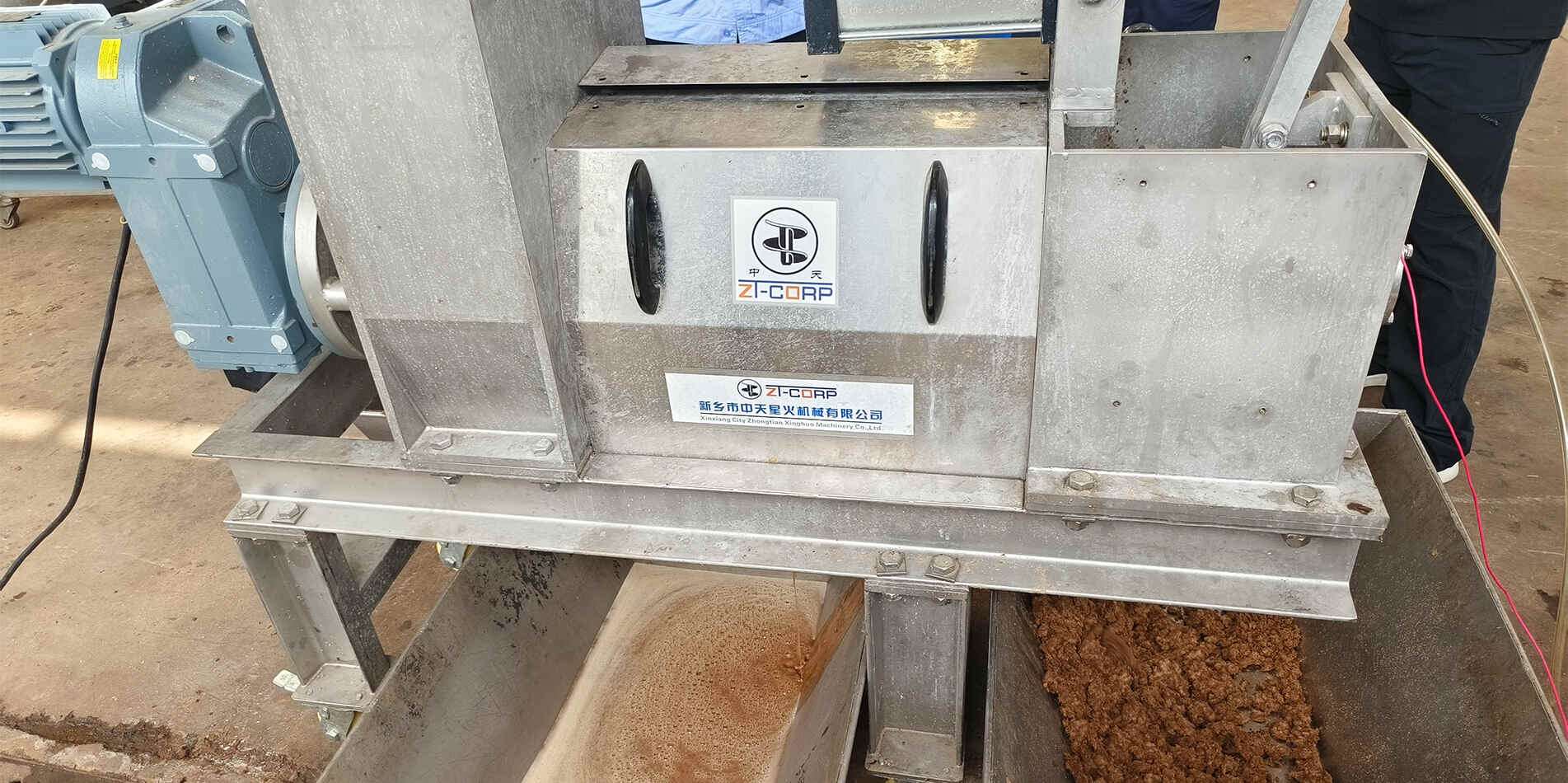
Zhongtian Xinghuo Machinery’s screw press dewatering machine, based on physical extrusion, focuses on the dewatering of fibrous materials, providing efficient and energy-saving dewatering solutions for the paper, food processing, biomass energy, and environmental protection industries.
Traditional fibrous material dewatering relies heavily on chemical agents or energy-intensive thermal drying, resulting in high costs and significant pollution risks. Zhongtian Xinghuo Machinery’s R&D team has developed a progressive extrusion technology by optimizing the screw structure design. This technology uses gradually increasing mechanical pressure to squeeze water out of the fiber, increasing the dewatering rate by more than 30% compared to traditional equipment. Tests show that typical materials such as bagasse and wood pulp fiber can have their moisture content reduced to below 45% after processing, while maintaining the fiber structure for easy subsequent resource utilization.
This equipment adopts a fully enclosed operation mode, eliminating the need for any chemical additives during the dewatering process and completely preventing secondary pollution. The unique variable frequency speed control system automatically adjusts the processing speed according to material characteristics. Combined with a low-power motor design, energy consumption is reduced by 40% compared to similar products, improving extrusion efficiency while reducing equipment wear and tear, and lowering maintenance costs by 60%.
Currently, this equipment has been successfully applied in the production scenarios of thousands of enterprises. A large paper manufacturing company reported that after adopting this equipment, its daily pulp processing capacity increased to 80 tons, and the wastewater reuse rate increased to 85%. In the fruit and vegetable processing sector, the screw extrusion dewatering machine achieves simultaneous dewatering of fruit pomace and extraction of juice, helping customers save over one million yuan in processing costs annually.
The company is collaborating with research institutions to develop an intelligent control system, which will enable real-time monitoring of moisture content and adaptive pressure adjustment in the future, continuously promoting the development of dewatering technology towards a green and intelligent direction. With the advancement of the “dual-carbon” strategy, this zero-pollution physical dewatering technology is expected to replace traditional processes in more industries, becoming a key piece of equipment for resource recycling.